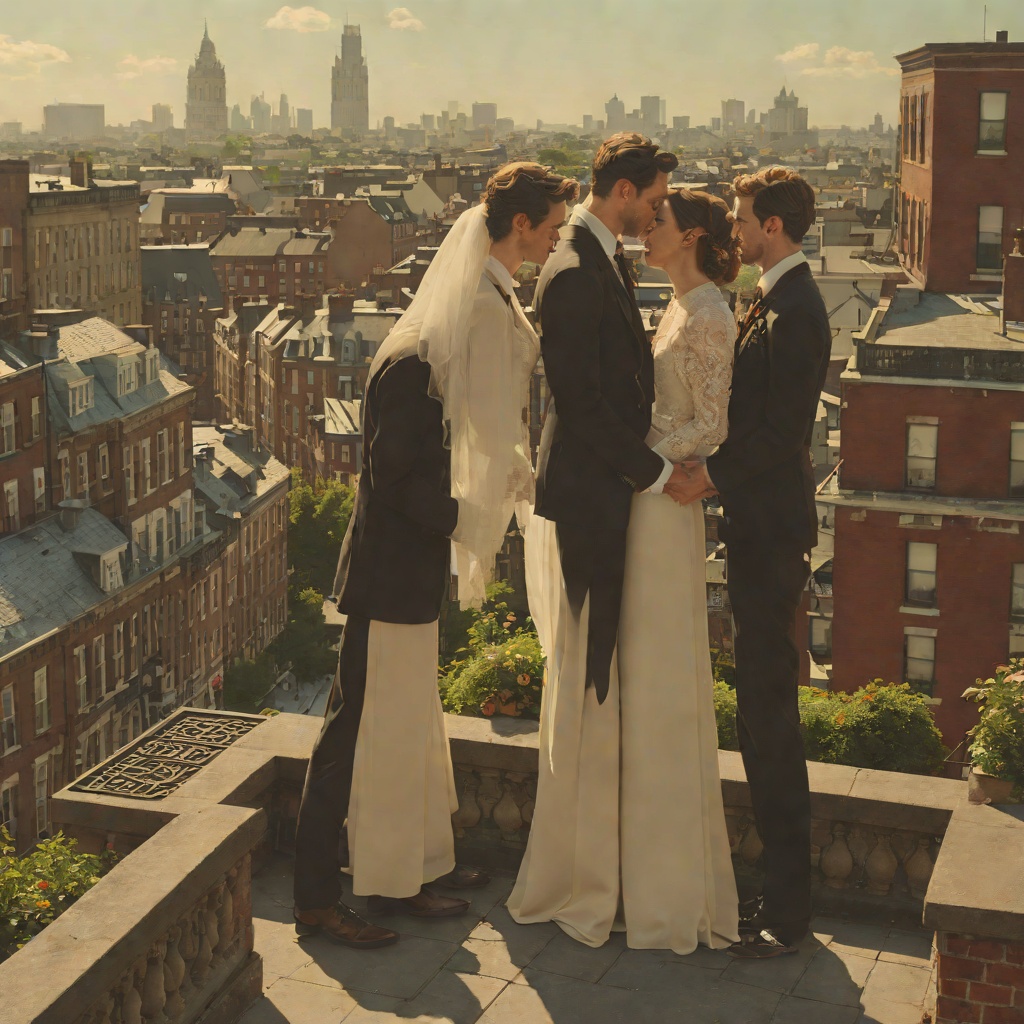
rooftop photograph of Lily
It Ends with UsThe rooftop photograph of Lily is a deliberately enlarged and distorted image of Lily Bloom on the rooftop during her first meeting with Ryle Kincaid. More than a keepsake, it materializes Ryle’s early fascination with Lily and later exposes how memory, desire, and possession become entangled in their relationship. Its movement from an intimate souvenir to a conspicuous object in their shared bedroom mirrors the relationship’s movement from chance encounter to domestic attachment and, ultimately, to a history Lily must confront.
Origin and Appearance
Ryle takes the photograph after asking Lily not to move while she is lying in a lounge chair. She is fully clothed, yet the act feels unexpectedly intimate to her; she likes that he has felt an impulse to remember her even though he believes they will never see each other again. The image therefore begins as a record of anticipated absence. Ryle studies the photograph on his phone and smiles, while Lily considers taking a picture of him in return but rejects the idea because a reminder of someone she will never see again feels depressing.
The original image is defined by its specific setting and composition: Lily’s hair, her relaxed body, and the marine-grade polymer lounge chair are all visible within the rooftop scene. Its later physical form is less direct. Ryle has the picture blown up and distorted so that its subject is difficult to identify at first. The visual alteration does not erase the memory; it conceals it while preserving enough of Lily’s appearance for recognition. When Lily finally understands what she is seeing, the image’s material details make the past unmistakable.
Ryle’s Keepsake and Confession
Ryle later explains that he had the picture made the day after taking it and kept it in his apartment for months. He says that Lily was the most beautiful thing he had ever seen and that he wanted to look at her every day. The photograph thus clarifies an attachment that Ryle had not openly communicated when he first took it. His explanation also changes the meaning of the rooftop encounter: what Lily experienced as a fleeting meeting had already become, for Ryle, an enduring private fixation.
The photograph is connected to Ryle’s later admission that Lily had remained unusually present in his thoughts. He describes searching for her after their first meeting because no one in his life had previously stayed so deeply in his mind, and he links his flowers to pride in her pursuit of her dream. The photograph and the flowers belong to the same pattern of repeated remembrance: both are physical expressions of feelings Ryle struggles to regulate or state directly.
Discovery and Domestic Display
The concealed image becomes visible to Lily at a gathering when she recognizes the blurred hair and the distinctive lounge chair. Her physical response is immediate: her blood seems to bubble, the room feels excessively warm, and she scratches at her chest while trying to explain the sensation as heat. The object’s significance is therefore disclosed before it is fully explained. It is not merely an old photograph; it is proof that Ryle has carried an image of Lily from their first meeting into his later life.
After Ryle and Lily begin living together, the photograph is moved into their bedroom. Ryle’s clothes and toiletries have already accumulated in Lily’s apartment, but hanging the ridiculous blurry photograph there makes the arrangement feel official to her. The image functions as a domestic marker: it turns a private memory into part of a shared interior and helps define cohabitation as a form of emotional commitment before marriage. At the same time, its distortion remains telling. Their apparent domestic stability is built around an image that both reveals intimacy and obscures its original circumstances.
Object, Memory, and Violence
The photograph’s meaning is inseparable from the violence that later enters Lily and Ryle’s relationship. During the kitchen incident, Ryle’s arm suddenly strikes Lily and knocks her backward against a cabinet handle. Later, when Lily confronts him about being pushed down the stairs, he falsely reduces the event to a fall before acknowledging that he pushed her. After reading Lily’s journals, he attacks her again, biting her over the wooden heart tattoo while she pleads for him to let her go. These events transform the photograph’s earlier tenderness into a disturbing contrast: the same man who preserved Lily’s image as an object of beauty also becomes the source of bodily danger.
The photograph does not cause the violence, but its presence exposes the unstable relationship between remembering and possessing. Ryle’s wish to look at Lily every day can be read as affectionate devotion, yet the enlarged image also fixes her in a form he controls. Lily’s recognition of the picture is bodily and involuntary before it becomes analytical, suggesting that the object carries the force of the past into the present. Its material persistence outlasts the explanations Ryle gives for his conduct, including his account of anger, blackouts, and the moment when something inside him snaps.
The relationship repeatedly joins harm to remorse and renewed intimacy. After one assault, Ryle says he has nothing to say that can undo what he did or make Lily believe it will not happen again, while still calling her his world and pleading for help because she is pregnant. In another moment, his hand on Lily’s stomach awakens emotions she has not simply stopped feeling; love remains attached to the action, and that attachment intensifies the pain. Against this cycle, Lily’s mother recalls how repeated incidents gradually lowered her own limit, until a slap felt bearable only because it was less severe than a beating. The photograph belongs to this same structure of emotional contradiction: it preserves the beautiful beginning without allowing the later harm to disappear.
Narrative Significance
As a recurring object, the rooftop photograph binds the novel’s romantic beginning to its later domestic crisis. It records Ryle’s first impulse to remember Lily, reveals the depth of his early fixation, and later becomes an item displayed in the bedroom they share. The image’s blur is especially significant because the relationship itself is repeatedly obscured by competing interpretations: attraction and fear, apology and injury, love and the need to leave.
The photograph also stands beside Lily’s acts of self-narration. In a letter written from Boston, she tells Ellen Diaries that she is sixteen no longer, that she lives in Boston, and that she is now in a very bad place with her husband, Ryle. Her writing separates the present from the earlier life in which she was worried about Atlas Corrigan, just as recognition of the photograph forces her to distinguish the first rooftop meeting from everything that followed. The object is a visual fragment of the past, but Lily’s changing account determines whether that fragment remains a romantic keepsake or becomes evidence of a relationship whose pattern must end.
Its final resonance is shaped by the contrast between Ryle’s claims and Atlas’s steadier presence. Atlas tells Lily that his life now feels good enough for her and leaves the timing to her readiness. Where Ryle’s photograph fixes Lily in an image he can preserve and display, Atlas’s gesture allows Lily to choose what happens next. The rooftop photograph therefore remains a powerful emblem of attachment, but not a promise that attachment alone can make a relationship safe.